Delta Lake foundation
Proprietary databases sized for aggregate returns
Open-format, versioned storage for granular data, with every load kept

Wekalp reads the logic your teams already run, builds it on a leaner technology stack, and puts change in the hands of the business. Three differences, and why they matter.
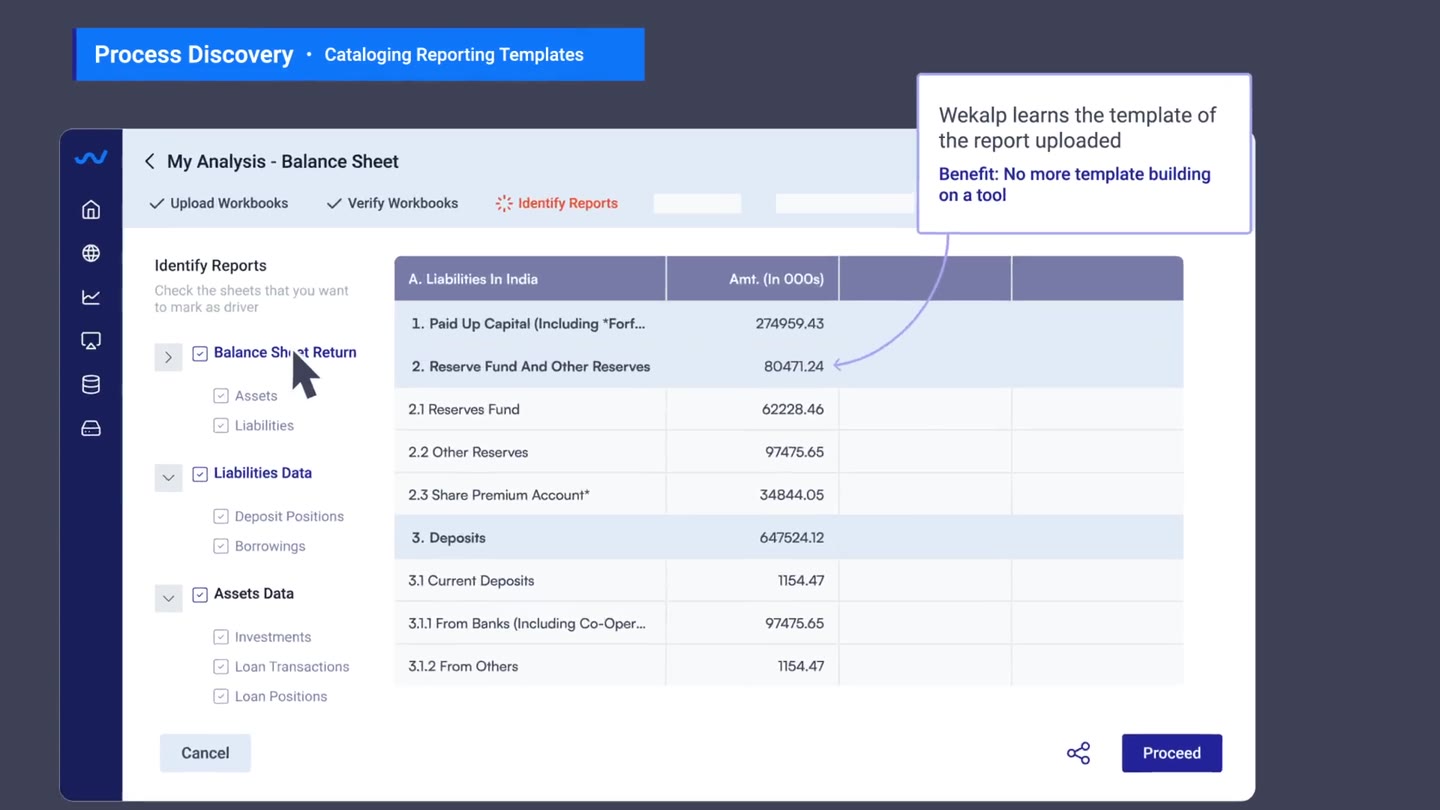
Traditional implementations begin with months of workshops to re-specify logic your analysts already run. Our document processing extracts it directly from your reporting spreadsheets, operational query documents, SOPs and templates, and turns it into working regulatory requirements.
Reporting spreadsheets, query documents, SOPs and templates. No re-specification of logic.
Days of your users' time, not months of requirement cycles.
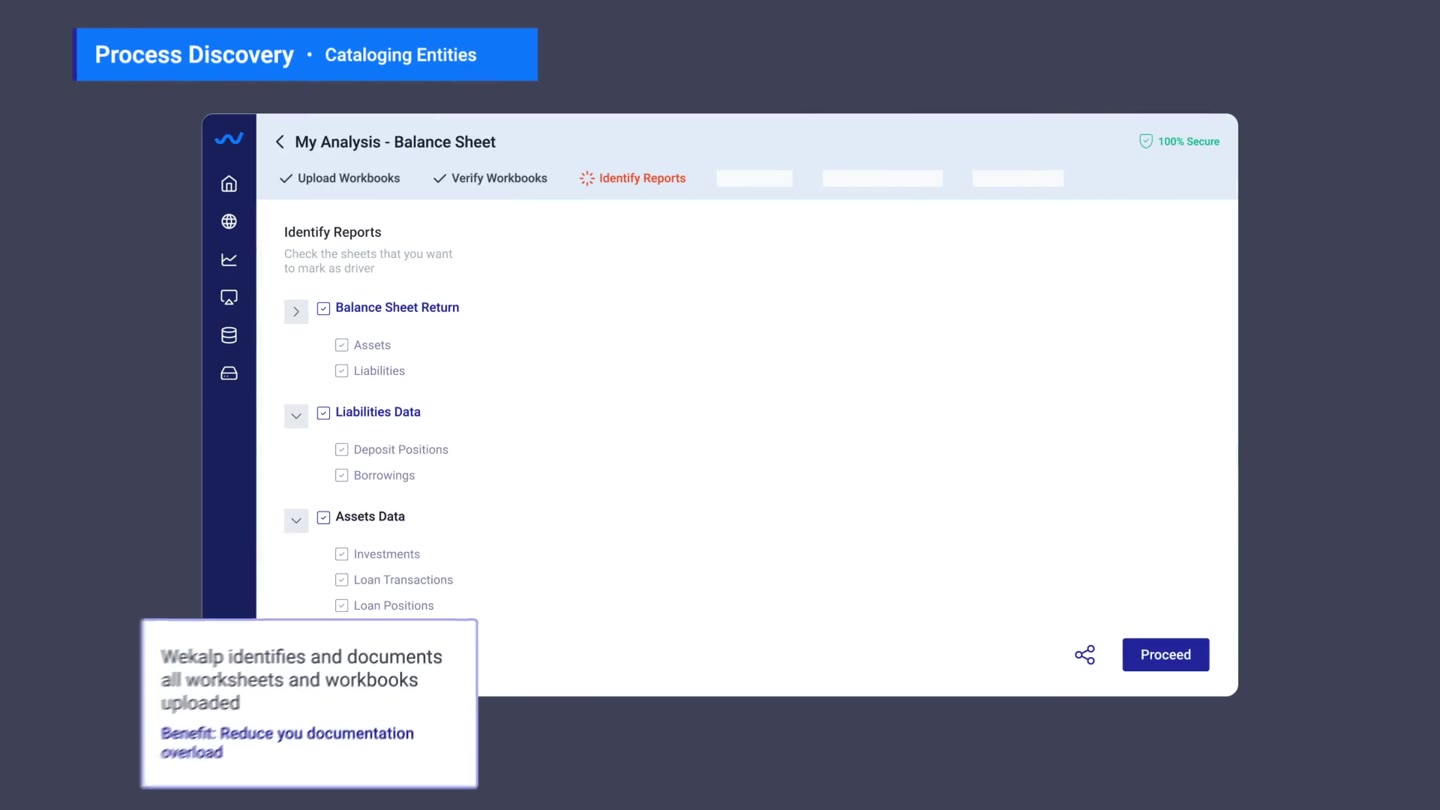
Process discovery reads your documents and traces lineage back to source.
Transformations, rules and templates generated, then configured and scheduled.
Unit, user and parallel-run testing, then go-live in your own environment.
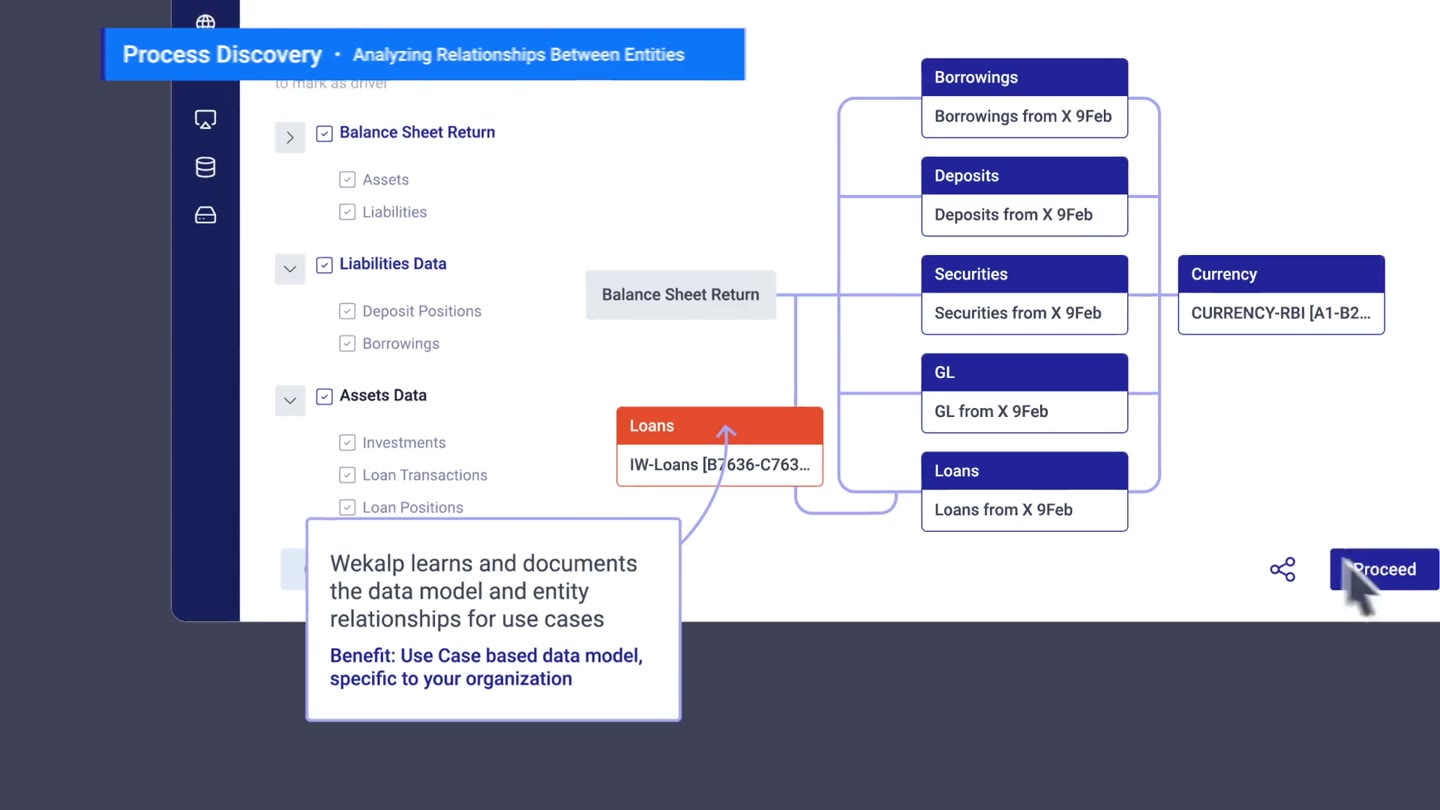
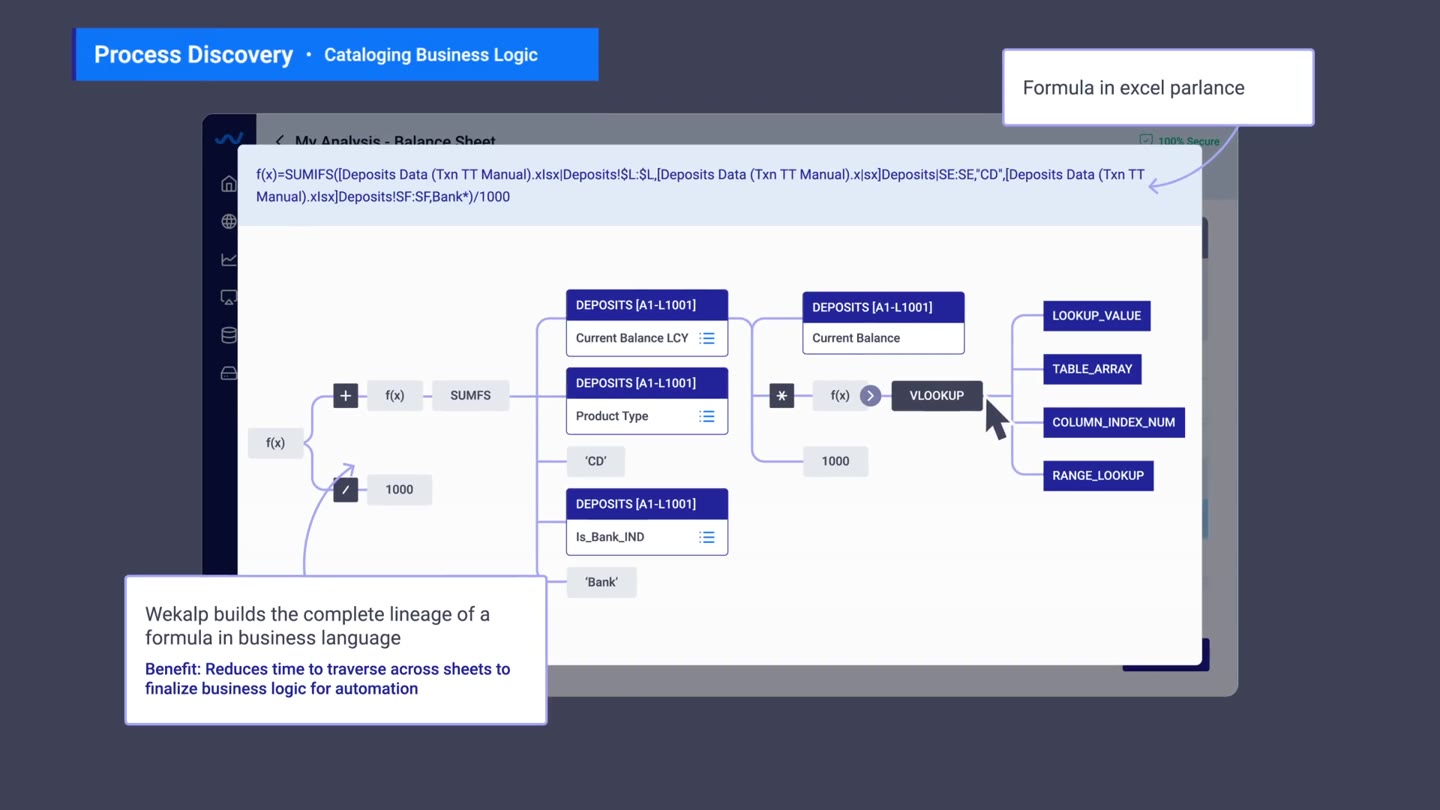
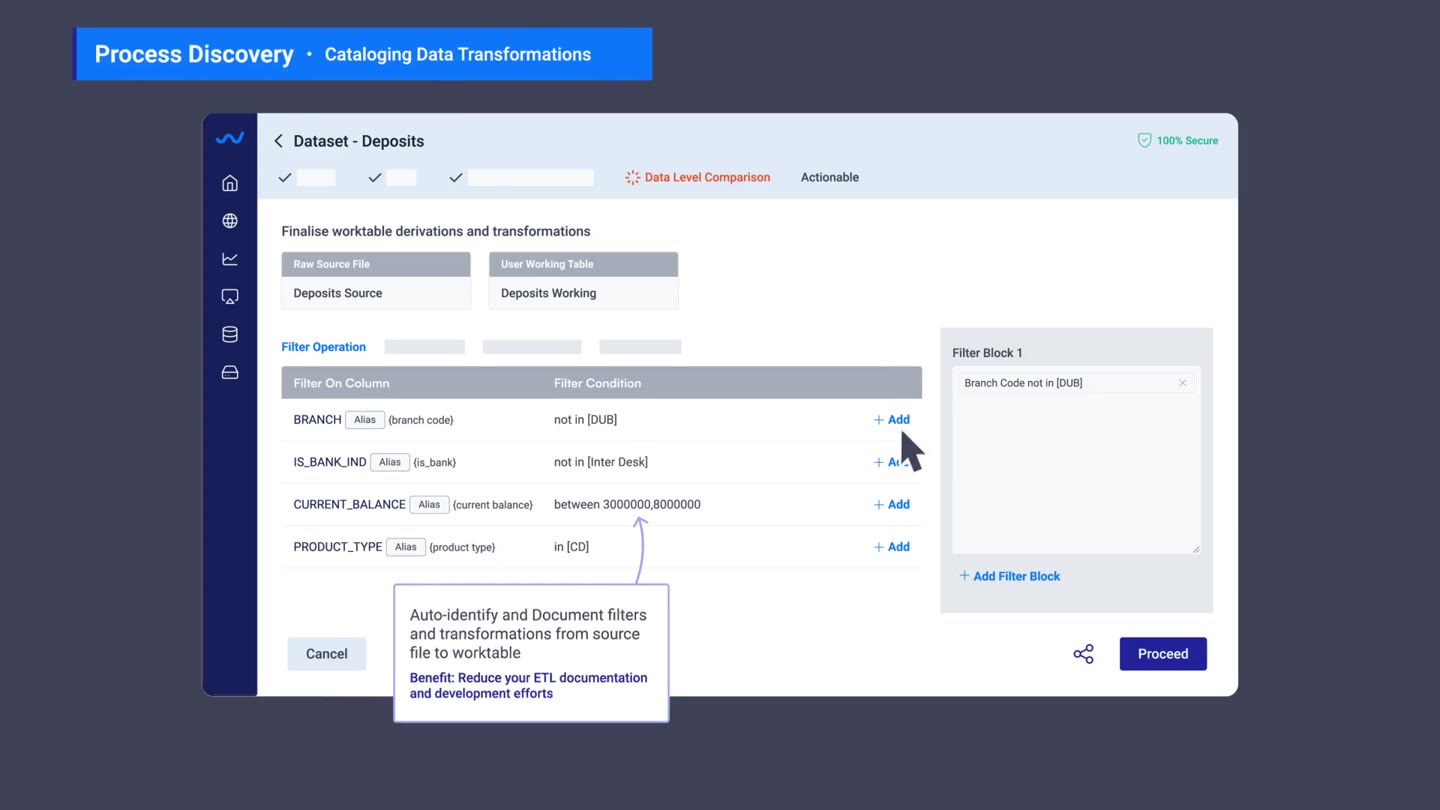
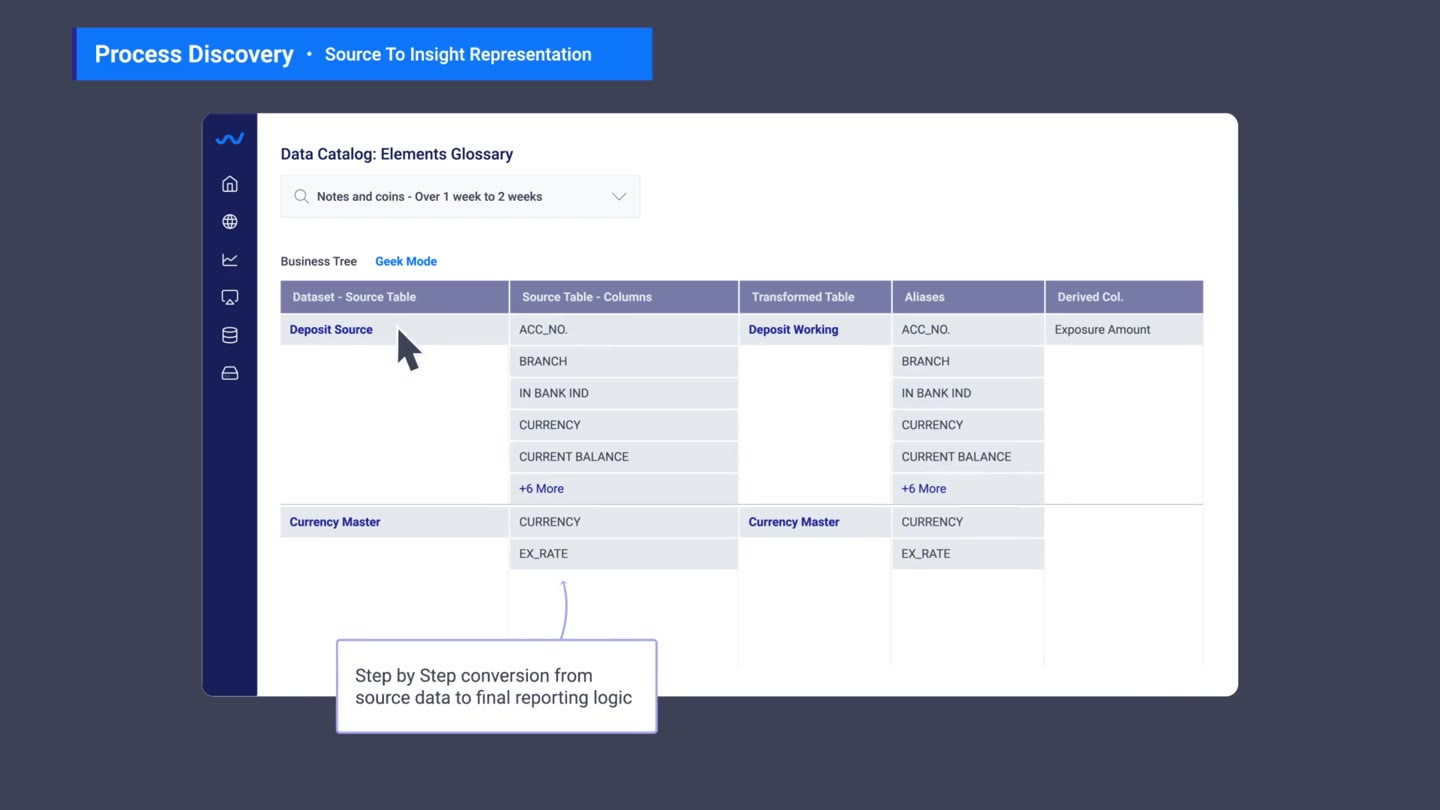
A traditional reporting stack stitches together as many as nine separate tools, each with its own licence, infrastructure and team. Wekalp brings them into one platform, built on an open Delta Lake foundation.

Proprietary databases sized for aggregate returns
Open-format, versioned storage for granular data, with every load kept
Compute tied to the database, so cost climbs with volume
Compute scales independently of storage, and only when it is needed
Rules in stored procedures, lineage and catalogue in separate tools
Rules, definitions, lineage and metadata held together in one layer
Separate vaults for PII and encryption tools bolted onto databases
Column-level access and PII protection inside the platform
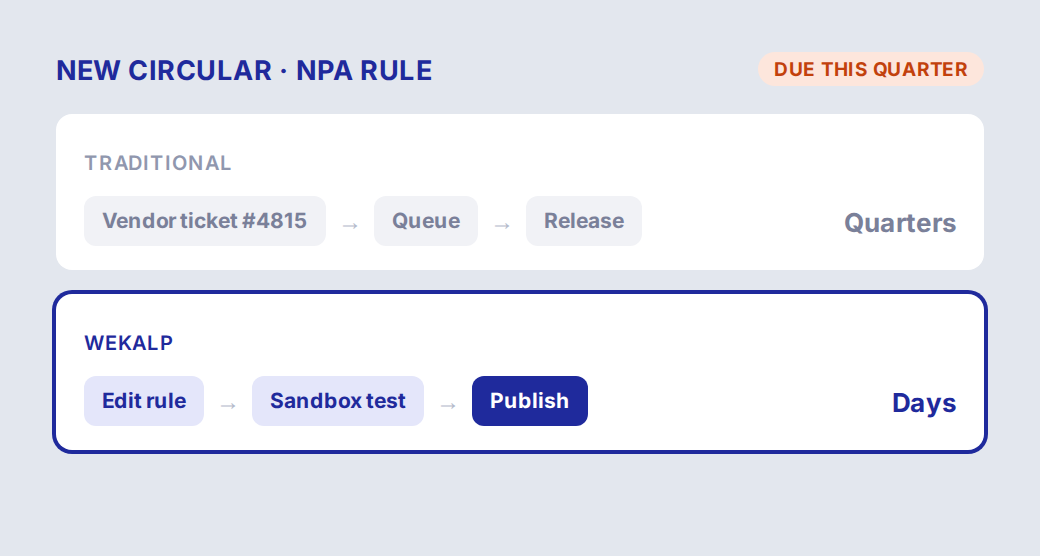
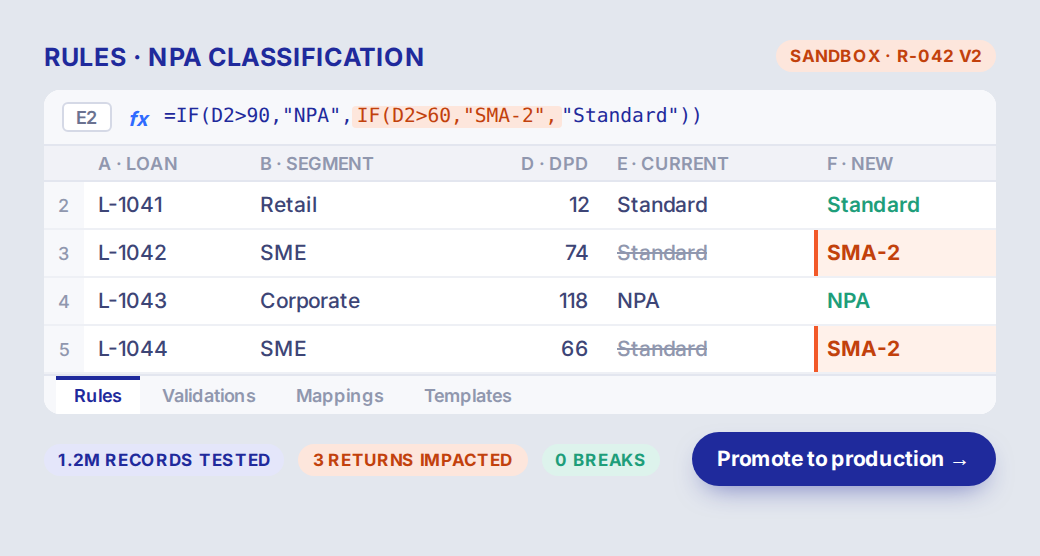
Regulations change every year. With traditional platforms, even a template change means a vendor ticket and a release cycle. With Wekalp, your team makes the change, tests it and publishes it.